Bracelet styling
How to style a bracelet with your watch
Compare wearing a bracelet beside your watch or on the opposite wrist, then balance proportions, colors and sleeves with a simple try-on checklist.
Decide which piece should lead
A watch and a bracelet can share an outfit without needing to look like a matching set. Start by choosing which detail you want to notice first. If your watch has a large face or a patterned strap, try a bracelet with a simpler outline. If the bracelet is the focal piece, compare it with a watch whose appearance feels quieter to you.
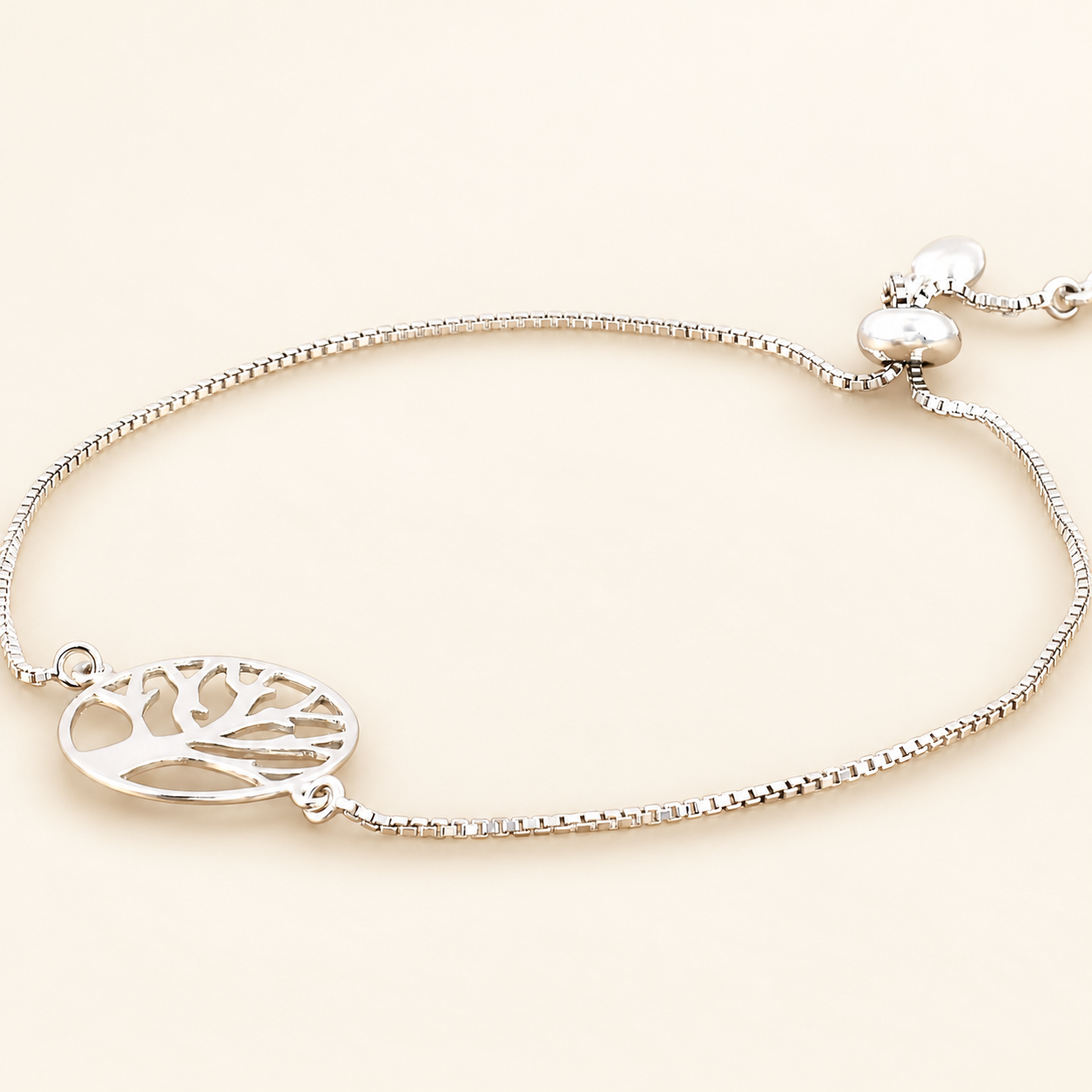
This is a visual exercise, not a rule about what a particular wrist should wear. Put the pieces on with the clothes you have planned rather than judging them only side by side on a table. The bracelet pictured here is a styling illustration; it is not a guarantee of compatibility with a particular watch.
Try the opposite wrist before building a stack
Wearing the bracelet on the wrist opposite your watch is a useful first comparison. You can see both pieces as part of the outfit while giving each its own space. Notice whether that arrangement feels balanced when your arms are relaxed, not only when you hold them together for a photograph.
If you prefer the look of both on one wrist, begin with just one bracelet. Observe where it sits relative to the watch as you move. Does it cover the face, gather near the crown or make the combination feel crowded? If so, return to separate wrists or choose one piece for that outfit.
Do not tighten an adjustable bracelet simply to hold it in a preferred position beside the watch. Judge each piece on its own fit first. Our bracelet length and adjustable-fit guide explains why a listed length and an adjustable closure need different questions.
Compare shapes as well as widths
A narrow bracelet is not automatically a quiet detail. A prominent charm, a bright central motif or a contrasting color can draw the eye even when the band itself is fine. Equally, a broad bracelet with a simple surface may look more restrained than several smaller pieces together.
Look at the watch face, strap and bracelet as three visible elements. Try repeating one feature, such as rounded shapes or a clean geometric line, while letting another feature differ. You can also choose contrast deliberately: a simple round watch alongside a bracelet with an angular detail.
Check the combination from normal viewing distance. A close-up photograph can make every small detail seem equally important, while an outfit view shows which part actually stands out. Keep the arrangement that suits the look you want, rather than trying to match every surface.
Use color as a connection, not an obligation
Begin with the colors already present in the watch: its case, dial, strap and visible fittings. A bracelet can echo one of those colors without matching the entire watch. If you like mixed metal tones, try repeating one tone elsewhere in the outfit so the choice feels deliberate to you.
Our guide to mixing gold and silver jewelry offers ways to work with pieces you already own. Use color names to discuss appearance, but check the actual material descriptions separately; a matching color does not establish matching materials.
You can also keep the watch and bracelet visually different and simplify the rest of the jewelry. There is no need to buy a new ring or necklace merely to complete a set around them.
Do a sleeve-and-desk check
Before settling on the combination, put on the shirt, knit or jacket you expect to wear. Bend your arm, fasten the cuff and rest your forearm as you normally would at a desk. Notice bunching, pressure, catching or noise that would bother you during the day.
Treat discomfort or repeated interference as a reason to separate the pieces or leave one off. A combination that looks good in a still image may not suit the way you use your hands. Do not assume that leaving a small gap will keep the pieces apart throughout normal movement.
This styling check does not establish whether two finishes can safely rub against each other. For care or contact concerns, follow the instructions for the individual watch and bracelet and ask their makers about anything unclear.
Save two combinations you would actually repeat
Choose one uncomplicated arrangement for ordinary days and, if you enjoy it, one more noticeable option for a different occasion. Record what you wore together and with which sleeve or outfit. A short note can be more helpful than buying another piece to solve a combination you have not tried.
Our weekly jewelry rotation guide shows how to turn successful pairings into a small, usable routine. A bracelet and watch can be one option in that routine rather than something you must wear together every day.
If a future bracelet purchase has a specific role, compare its listed measurements, closure and materials with that role before ordering. Keep current options and availability on the product page; an outfit plan is a reference, not a reservation.
Shipping & delivery · Returns & exchanges · Ask us a question